
Lightning Arrester
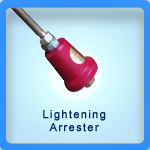
Simple, effective, and joint-free. Spaceage manufactures lightning arresters using the same principle as internationally available high-performance models — a single rod with a spike and insulated mounting, no joints — at a fraction of the cost of multi-spike alternatives.
The Science Behind It
Why Joints Kill Lightning Arrester Effectiveness
It is established that for a lightning arrester to be effective, the surge energy produced by a lightning strike must be earthed using a joint-less conductor. Every mechanical joint introduces electrical resistance and potential failure points that reduce the surge earthing effectiveness.
A conventional 5-spike model has three joints: the spike screwed into the central dome, the dome screwed onto the central rod, and the rod screwed to the base. These three joints significantly reduce effectiveness. Spaceage's design — a single rod with a spike at one end and an insulated mounting at the other — has zero joints, following the same principle used in internationally available premium models.
| Feature | Spaceage | 5-Spike |
|---|---|---|
| Joints | 0 | 3 |
| Joint-less path | ||
| Cost effective | ||
| Int'l standard | Varies |
Applications
Where It's Installed
Telecom Towers
BTS tower tops require reliable lightning protection — a weak joint can fail under a strike and destroy all equipment below.
Industrial Buildings
Factories, warehouses, and commercial buildings in lightning-prone zones need effective surge earthing.
BTS Shelter Rooftops
Shelter-top installation protects all equipment inside from lightning-induced surges travelling through power and signal lines.
High-Risk Zones
Northeast India, coastal areas, and elevated terrain sites with high lightning frequency benefit most.
FAQ
Frequently Asked Questions
Request a Quote for Lightning Arrester
Effective protection at one-third the cost of conventional models. Contact us for bulk pricing.